Introduction
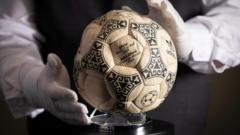
The football that became an emblem of controversy and genius in the world of football has been sold for a staggering £2.5 million. This is the ball that Diego Maradona famously used to score his 'Hand of God' goal during the 1986 World Cup quarter-final against England. This event not only marked a pivotal moment in football history but also solidified Maradona's legacy as one of the sport's greatest icons. The sale of this ball at auction serves as a reminder of the impact that a single moment can have on the collective memory of football fans around the world.
The auction of this historic ball highlights the intersection of sport and culture, where memorabilia can fetch astronomical prices due to their significance. The 'Hand of God' goal is often discussed in the context of sportsmanship and ethics, as it involved Maradona using his hand to score, which was not seen by the match officials. This duality of brilliance and controversy is what makes the ball's sale not just a financial transaction, but a moment of reflection on the nature of football itself.
What happened
The ball in question was sold at auction, fetching a remarkable £2.5 million, a price that underscores its significance in football history. This particular ball was used during the quarter-final match of the 1986 World Cup, where Maradona scored two of the most famous goals in football history: the 'Hand of God' and the 'Goal of the Century'. The auction drew attention from collectors and football enthusiasts alike, eager to own a piece of history tied to one of the sport's most legendary figures.
The sale of the ball has reignited discussions about Maradona's legacy and the broader implications of his actions during that match. While the 'Hand of God' goal is often viewed as a controversial moment, it is also celebrated for the sheer brilliance of his second goal, where he dribbled past multiple English defenders to score. This duality continues to fascinate fans and analysts, making the ball a symbol of both genius and debate in the beautiful game.
BetAI analysis
From a tactical perspective, Maradona's performance in that match exemplified the importance of individual brilliance in football. His ability to create opportunities where none seemed to exist was a testament to his unique skill set. The 'Hand of God' goal, while controversial, showcased his instinct to take advantage of the situation, a trait that many great players possess. This ability to blend cunning with talent is often what separates legendary players from the rest.
Moreover, the auction price reflects not just the ball's historical significance but also the growing market for sports memorabilia. As fans increasingly seek tangible connections to their heroes, items associated with monumental moments in football history become highly sought after. This trend indicates a broader cultural shift where the narratives surrounding sports are just as valuable as the games themselves. The sale of the ball serves as a reminder that football is not only about what happens on the pitch but also about the stories that resonate with fans across generations.
Conclusion
The sale of Diego Maradona's 'Hand of God' ball for £2.5 million is more than just a financial transaction; it is a significant cultural event that encapsulates the complexity of football history. This moment serves as a reminder of Maradona's dual legacy as a player who could evoke both admiration and controversy. The ball stands as a symbol of the rich tapestry of narratives that make football the beloved sport it is today.
As fans and collectors reflect on the implications of this sale, it is clear that the impact of Maradona's actions during that fateful match will continue to spark discussions for years to come. The intersection of sport, culture, and economics is vividly illustrated through this auction, proving that even decades later, moments from the past can still captivate our imagination. For more details, visit [BBC Sport](https://www.bbc.co.uk/sport/football/articles/cqxvj8j7gy8o?at_medium=RSS&at_campaign=rss).
This article references reporting by BBC Sport. Visit the publisher for the complete report and original quotes.